





 4.8
4.8
 3,000+
Procedure
- 10–15 min per eye
- Excimer surface ablation
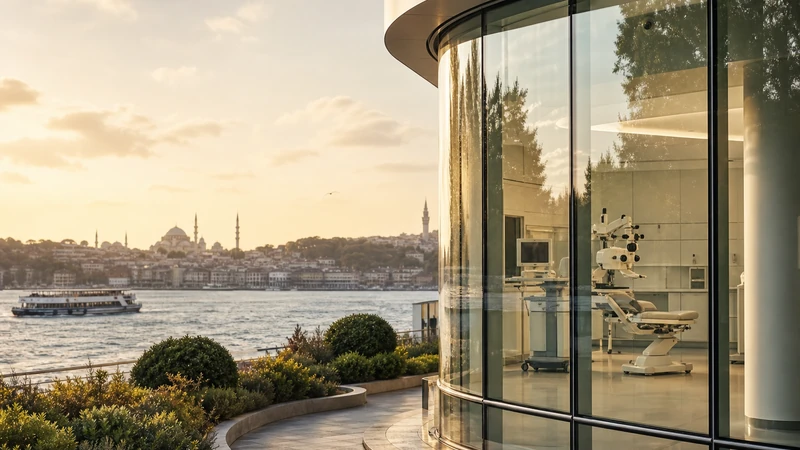
No-flap laser for thin corneas and active lifestyles. PRK family procedures at JCI Istanbul clinics — coordinated for UK & European patients.
Free surface laser check
Am I suitable for PRK?
Your information is secure and confidential.
When a corneal flap is not suitable, surface laser reshapes the eye directly — PRK, LASEK, or no-touch TransPRK. Same excimer platforms as UK clinics, International Patient Centre support from assessment to follow-up.

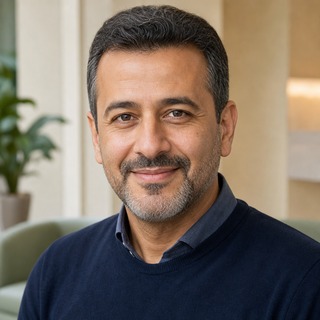

PRK, LASEK, and TransPRK reshape the cornea without a flap — procedure facts first, travel after Pentacam confirms safe ablation depth.
Results at our eye centre
60-second check · clinical team reviews why LASIK may not suit and whether surface laser is the safer route.
Pentacam pachymetry and topography — confirms residual stromal bed for safe ablation depth before any recommendation.
PRK, LASEK, or TransPRK — epithelium removed then excimer reshaping · 10–15 minutes per eye · no flap.
Bandage contact lens 3–5 days · grittiness normal · vision improves as epithelium regenerates.
Checks in Istanbul · then video reviews at 1 week, 1 month, and 3 months with your patient care specialist.
Typically 5–7 nights in Istanbul · fly after surgeon clears epithelial healing and useful vision.
Clinical facts sit in the summary above. Use these sections for PRK vs LASEK vs TransPRK, eligibility, excimer technology, and the step-by-step procedure guide — confirmed only after Pentacam mapping.
Side-by-side comparison of epithelium handling, recovery, and when each no-flap technique fits.
Compare variants → SuitabilityThin corneas, occupation, dry eye, and when flap-based or implant options may suit better.
Read criteria → TechnologyZEISS MEL 90, WaveLight EX500, and TransPRK — same platforms used at leading UK and Irish clinics.
See technology → ProcedureStep-by-step from epithelium removal to bandage lens, healing timeline, and return-home clearance.
Clinical guide →Not sure yet? Start with the 60-second check — our clinical team reviews why LASIK may not suit and whether surface laser is the safer route.
All three reshape the cornea without a flap. Your surgeon picks the technique after Pentacam mapping — thin corneas, occupation, and epithelium healing profile all matter.
Epithelium removed · direct surface ablation
Alcohol-loosened epithelium · replaced after laser
No-touch · laser-only surface ablation
Technique choice is confirmed after corneal mapping — not marketing preference. Long-term outcomes match once epithelium heals.
Our Istanbul eye centre uses the same manufacturer platforms deployed at leading private laser eye centres. The clinical technology is equivalent; what differs is how your trip, aftercare, and patient care support are packaged.
Flying-spot excimer · Wavefront-guided standard
Carl Zeiss's flagship excimer laser for smooth, precise corneal ablation — the same platform used at premium clinics across the UK and Ireland.
Wavefront-guided treatment maps each eye's unique imperfections for sharper night vision. Standard at all our eye centre — not an optional upgrade.
London · Manchester · UK & Ireland
500 Hz · Fastest excimer laser
High-speed ablation minimises procedure time and corneal dehydration — ideal for higher prescriptions and faster treatment sessions.
Birmingham · Dublin · major UK cities
Iris registration · Wavefront-guided
CustomVue wavefront treatment with iris registration for precise alignment — widely used at private eye hospitals in London and Manchester.
London · Manchester
Femtosecond · Flapless SMILE
The only femtosecond platform approved for SMILE — flapless lenticule extraction through a 2–4 mm incision, with less corneal nerve disruption.
Leading UK & Irish SMILE centres
Scheimpflug tomography · Corneal thickness map
3D corneal analysis before any laser or lens recommendation — detects thin corneas, keratoconus risk, and astigmatism axis with sub-micron precision.
Custom treatment maps · Night vision optimisation
Measures higher-order aberrations unique to your eye — the data behind wavefront-guided LASIK and PRK for sharper low-light vision.
The excimer platforms above are operated by fellowship-trained refractive surgeons — not rotating locums. Your assigned surface laser surgeon, CV, and procedure volumes are confirmed in your quote pack before you commit.
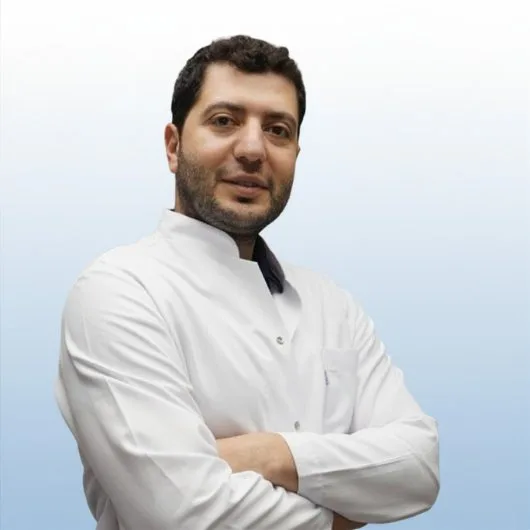
MD, Hacettepe University English Program (2015) · Ophthalmology residency, Namık Kemal University (2017–2022) · Laser vision correction (LASIK, SMILE, PRK, No-Touch) and ICL surgery
Head-to-head guides when you are weighing PRK against flap-based or implant options — not marketing fluff.
Flapless lenticule vs surface laser — recovery, dry eye, and candidacy.
View comparison → Head-to-head LASIK vs SMILEWhen a flap or flapless laser beats surface ablation — and when PRK wins.
View comparison → Treatment guide PRK vs LASIKWhy thin corneas and occupation sometimes rule out a flap.
View LASIK guide →Everything you need to know before booking surface laser in Istanbul — PRK, LASEK, and TransPRK explained honestly, from how the procedure works to travel timing, eligibility, and expected outcomes.
Surface laser procedures — PRK (Photorefractive Keratectomy), LASEK, and TransPRK — reshape the cornea without creating a flap. The excimer laser removes microscopic amounts of tissue from the corneal surface after the epithelium (the outer layer) is removed or dissolved. Once the epithelium regenerates, the new corneal shape permanently corrects myopia, hyperopia, and astigmatism.
Surface laser is the clinical standard when LASIK or SMILE is not safe — typically because the cornea is too thin for a flap, the patient has an active lifestyle where flap trauma is a concern, or topography shows a profile better suited to surface ablation.
Topical anaesthetic eye drops numb the eye within 30 seconds. No injection or sedation is required for most patients.
PRK: epithelium removed with alcohol or a blunt instrument. LASEK: epithelium loosened and folded aside, then replaced. TransPRK: the excimer laser removes epithelium and reshapes in one continuous step — no manual separation.
The excimer laser — guided by your wavefront map — reshapes the exposed corneal stroma. Tissue removal is calculated from pre-operative measurements; typically 10–20 microns per dioptre of correction.
A soft bandage contact lens protects the eye while the epithelium regenerates over 3–5 days. Antibiotic and anti-inflammatory drops are prescribed. Mild discomfort and light sensitivity are normal in the first 48–72 hours.
The bandage lens is removed once epithelium has healed. Vision improves progressively over days and weeks. Your International Patient Centre team coordinates check-ups before you fly home.
Surface laser requires a longer stay than LASIK because the epithelium must heal before flying. A typical iSee Turkey PRK visit is 5–7 nights — we build the schedule around your procedure and clearance check, not the other way around.
Your International Patient Centre specialist meets you at the airport. Private transfer to your hotel. Rest and prepare for pre-operative assessment the next day.
Morning: Pentacam topography, refraction mapping, and surgeon consultation. Afternoon: PRK, LASEK, or TransPRK (10–15 minutes per eye). Bandage lens applied. Rest in your hotel with prescribed drops.
Daily drop schedule. Light sensitivity and mild discomfort are normal. Surgeon checks epithelial healing; bandage lens removed when ready. Vision improves each day — sunglasses essential outdoors.
Once the surgeon confirms epithelial healing and safe travel, private transfer to the airport. Video follow-ups at 1 week, 1 month, and 3 months with your clinical team.
Surface laser is often the right path when LASIK is ruled out — but not everyone is suitable. Your surgeon confirms fit after Pentacam mapping and full diagnostics at our Istanbul eye centre.
If surface laser is not suitable, alternatives include ICL lens implant (high prescriptions, thin corneas), LASIK (when corneal thickness allows), or lens replacement (patients over 45 with presbyopia).
of patients at our eye centre achieve 20/20 or better once healing completes — typically by 3 months.
achieve functional distance vision without glasses after full stabilisation.
significant complication rate at our eye centre — in line with published international benchmarks.
most patients reach functional driving vision once epithelium has healed.
Long-term outcomes match LASIK once the cornea has fully stabilised — the trade-off is slower initial recovery, not lower final quality. Your surgeon sets realistic expectations based on your prescription, age, and corneal profile.
PRK, LASEK, and TransPRK are among the most studied refractive procedures. At experienced centres with modern excimer platforms, serious complications are rare. The main differences from LASIK are recovery discomfort and haze risk — not overall safety profile once healed.
Mild to moderate grittiness, tearing, and light sensitivity while the epithelium regenerates. Managed with prescribed drops and oral analgesia if needed. Resolves as the bandage lens comes off.
Subepithelial haze can occur during healing, especially with higher corrections. Mitomycin-C and modern laser profiles reduce risk. Most haze resolves; persistent cases are treatable.
Night vision symptoms during healing are normal and typically improve over weeks to months as the cornea stabilises.
Enhancement may be considered 3–12 months after healing if residual prescription warrants it and corneal thickness permits.
Surface laser preserves corneal nerves differently from LASIK flap creation. Dry eye is typically milder and shorter-lived than flap-based procedures.
Serious infection is exceptionally rare with antibiotic prophylaxis and bandage lens protocols. Antibiotic drops are included in your package.
Our clinical governance team reviews surgeon outcome data annually at our JCI-accredited eye centre. Your assigned ophthalmologist confirms the safest surface laser variant — PRK, LASEK, or TransPRK — after mapping, not before.
Honest answers on thin corneas, keratoconus screening, prescription limits, long-term results, and how PRK compares to SMILE and LASIK.
Condition guides: Myopia · Astigmatism · Keratoconus · Compare all treatments
"Sarah answered my WhatsApp at 11pm on a Sunday. PRK done Tuesday, flew home Wednesday seeing 20/20. The patient care team was at every step — airport, hotel, clinic. Honestly better than any UK private experience."
 ★★★★★
★★★★★
"PRK in Istanbul — 20/20 the next morning. iSee Turkey handled every single detail. Quote matched the bill exactly. Highly recommend to anyone on the fence."
Your surgeon recommends based on corneal mapping and lifestyle — not upselling. These are the routes we discuss most often when PRK, LASEK, or TransPRK isn't the best match.
When corneal thickness allows a flap — faster day-one clarity and shorter Istanbul stay than surface laser.
Lenticule extraction through a small incision — faster recovery than surface laser when the cornea suits VisuMax.
Removable micro-lens when laser is not safe — thin corneas, high myopia, or significant dry eye.
Premium IOLs for distance and near vision when laser and ICL are not the right long-term answer.
Premium IOL implants — typically within days of enquiry, not months of waiting.
Procedure choice is confirmed after Pentacam mapping and surgeon review — your International Patient Centre specialist walks you through options before you commit.
Your clearer future begins with
one message.
No commitment, no pressure. Our clinical team will review your PRK details and reply within 2 hours — Mon–Sat, 9am–6pm GMT.
Prefer a quick check? Take our 60-second PRK eligibility check →
Speak with our patient care team today — no forms required if you prefer WhatsApp. Just a real conversation about your surface laser options in Istanbul, answered by someone who has helped thousands of patients make this journey.
Eligibility assistant
General guidance only — not medical advice. A qualified ophthalmologist confirms eligibility after clinical assessment.