






 4.8
4.8
 3,000+

Procedure
- 30–45 min per eye
- Phacoemulsification
Skip the NHS wait. Premium IOL implants in Istanbul — both eyes, one trip, all-inclusive.
Free cataract check
Am I suitable for cataract surgery?
Your information is secure and confidential.
Don't wait 18 months for NHS treatment. Premium cataract surgery in Istanbul — Alcon and Zeiss phaco platforms, trifocal and EDOF IOL implants, JCI-accredited eye hospital.



IOL choice and visual goals first — skip NHS waits without compromising on lens quality or surgeon experience.
Cataract results at our eye centre
60-second check · clinical team reviews cataract severity, IOL goals, and NHS wait frustration.
Eye length and corneal measurements · IOL power calculation · monofocal vs premium lens discussion.
Clouded lens emulsified and removed · foldable IOL implanted · 30–45 minutes per eye under topical drops.
Second eye next day typical · protective shield first night · vision often clearer within 24 hours.
Reviews at 1 week, 1 month, and 3 months · local optician can assist if needed.
Fly 48–72h after final eye · 5–6 nights in Istanbul when both eyes treated · package includes hotel.
Clinical facts sit in the summary above. Use these sections for IOL variants, eligibility criteria, phaco technology, and the step-by-step cataract guide — confirmed only after biometry and lifestyle discussion.
Side-by-side comparison of premium IOL options — spectacle independence, night driving, and lifestyle fit.
Compare variants → SuitabilityCataract severity, eye health, astigmatism, and when RLE or laser may suit better than cataract surgery.
Read criteria → TechnologyAlcon Centurion, Zeiss CALLISTO, and J&J Veritas — same phaco systems used at leading UK private hospitals.
See technology → ProcedureStep-by-step from phacoemulsification to IOL implantation, recovery timeline, and travel clearance.
Clinical guide →Not sure yet? Start with the 60-second check — our clinical team reviews whether cataract surgery fits your vision goals and IOL preferences.
Your surgeon recommends based on lifestyle, pupil size, and night-driving needs — not upsell pressure. All three are implanted through the same phaco incision at our Istanbul eye centre.
Single focus · NHS-equivalent standard
PanOptix · AT LISA — near, intermediate & distance
Vivity · Tecnis Symfony — extended depth of focus
Lens choice is confirmed after biometry and lifestyle discussion — not before your assessment. Premium IOLs that cost extra on the NHS are included in our all-inclusive package structure.
Our Istanbul eye centre uses the same phacoemulsification platforms deployed at leading private eye hospitals in the UK and Ireland. The clinical technology is equivalent; what differs is how your trip, aftercare, and patient care support are packaged.
Active fluidics · Adaptive energy control
Alcon's flagship phacoemulsification platform — the same system used at premium cataract centres across the UK. Delivers consistent chamber stability and efficient lens removal through micro-incisions.
Compatible with the full Alcon IOL range including PanOptix trifocal and Vivity EDOF — implanted through the same self-sealing incision.
London · Manchester · major UK private hospitals
Digital guidance · Real-time IOL alignment
Carl Zeiss's computer-assisted guidance system overlays surgical markers directly onto the surgeon's view — improving IOL centration and toric axis alignment for astigmatic patients.
Leading UK & Irish cataract centres
Dual-fluidics · Enhanced chamber stability
J&J Vision's advanced phaco platform paired with the Tecnis IOL family — including Tecnis Symfony EDOF and monofocal options. Widely used at private eye hospitals in London and Dublin.
London · Dublin · UK private hospitals
Scheimpflug tomography · Corneal thickness map
3D corneal analysis before any laser or lens recommendation — detects thin corneas, keratoconus risk, and astigmatism axis with sub-micron precision.
Custom treatment maps · Night vision optimisation
Measures higher-order aberrations unique to your eye — the data behind wavefront-guided LASIK and PRK for sharper low-light vision.
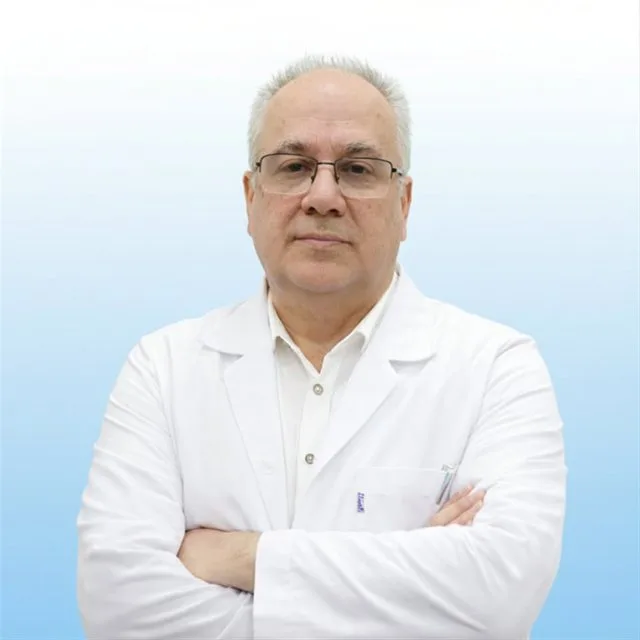
The phaco and premium IOL platforms above are implanted by fellowship-trained anterior segment surgeons — not rotating locums. Your assigned cataract surgeon, CV, and procedure volumes are confirmed in your quote pack before you commit.
MD, Uludağ University (1988) · Ophthalmology residency, Dicle University (1992) · Former Head of Ophthalmology, Harran University Faculty of Medicine (1995–1999, 2008–2013)
Procedure steps, eligibility, results, and travel planning — expanded below. For a quick overview, see the clinical summary and care pathway above.
A cataract is the clouding of the eye's natural crystalline lens — the clear structure sitting behind the iris that focuses light onto the retina. Surgery is the only effective treatment: drops, glasses, and diet cannot reverse cataract formation. Modern phacoemulsification is one of the most refined and frequently performed surgical procedures in medicine.
Topical anaesthetic drops are applied to completely numb the eye surface. No injection into the eye is required for routine cases. No general anaesthetic. You are awake but feel no pain.
Your surgeon makes two tiny self-sealing incisions in the cornea — typically 2.2–2.8mm wide. These are so small that no stitches are required; the incisions seal themselves through the eye's internal pressure.
A precise circular opening is made in the front of the lens capsule — the thin membrane surrounding the natural lens. This allows access to the clouded lens material while preserving the back of the capsule, which will hold the IOL.
A small ultrasound probe is inserted through the incision. High-frequency vibrations emulsify the clouded lens material, which is simultaneously aspirated out of the eye by gentle suction. This takes approximately 10–20 minutes.
Your chosen intraocular lens — folded into a small injector — is inserted through the same micro-incision and unfolds within the lens capsule. Your surgeon positions it precisely. The IOL is permanent and requires no maintenance.
The corneal incisions seal naturally. No stitches. A shield may be placed over the eye. You rest for 20–30 minutes and are then transferred to your hotel by your patient care specialist.
Most patients having cataract surgery in both eyes spend 5–6 nights in Istanbul. We build the schedule to minimise your time away while ensuring adequate rest between eyes and a clear post-operative check before you fly.
Private transfer from Istanbul Airport — your patient care specialist meets you at arrivals. Check into your partner hotel. Rest, settle in, and prepare for your pre-operative assessment the next day.
Afternoon: Biometry, corneal topography, pupil examination, and IOL power calculation. Full discussion with your surgeon on IOL options and expectations. Your patient care team accompanies you throughout.
Morning: Phacoemulsification under topical anaesthesia — typically 30–45 minutes. Return to hotel by midday. Rest with protective shield. Most patients notice improved vision the same day.
Morning: Post-op check confirms the first eye is healing well. Afternoon: Second eye surgery. Return to hotel and rest. Your patient care team remains available by WhatsApp.
Optional post-op check if clinically indicated. A free day — many patients enjoy a gentle walk along the Bosphorus. Vision in both eyes usually noticeably clearer by this point. Wear sunglasses outdoors.
Morning: Final consultation confirms both eyes are healing and vision is on track. Private transfer to the airport. Fly home with medication and a written discharge summary for your UK optician.
UK patients face a clear choice: wait on the NHS, pay UK private rates, or travel to Istanbul. Here is an honest comparison of what each route typically offers:
This comparison reflects typical UK pathways — not individual NHS trust policies. Contact us for a personalised quote with no obligation; we do not publish fixed fees on this page.
Cataract surgery is suitable for the majority of adults with visually significant cataracts. The key factors assessed at your pre-operative consultation in Istanbul include cataract density, overall eye health, and your visual priorities for IOL selection.
If cataract surgery is not yet appropriate, we will tell you honestly. For patients under 45 with refractive error but no cataract, alternatives include LASIK, ICL lens implant, or lens replacement.
Surgery is recommended when clouding affects daily life — driving, reading, work — not simply because a cataract is visible on scan. Read: When to have cataract surgery? · Full cataracts guide.
No — only phacoemulsification with IOL removes lens clouding. LASIK after previous laser is routinely performed with modified biometry. Read: Can LASIK fix cataracts?
overall success rate at our eye centre — matching UK and European benchmarks.
most patients notice dramatically clearer vision within 24–48 hours of surgery.
of trifocal IOL patients report rarely or never needing glasses for daily tasks.
serious complication rate — in line with published international ophthalmology standards.
Cataract surgery permanently removes the clouded natural lens. The artificial IOL cannot form a cataract. A small proportion of patients develop posterior capsule opacification (PCO) months or years later — treated quickly with a painless 5-minute YAG laser procedure.
Standard monofocal IOL restores distance vision — reading glasses needed for near. Trifocal and EDOF lenses offer spectacle independence with trade-offs in night vision. Read: Monofocal vs trifocal IOL · Trifocal vs EDOF IOL · Cataract treatment options.
Cataract surgery is one of the safest and most successful surgical procedures in medicine. Serious complications are very rare. The risks patients should understand are:
Sometimes called a "secondary cataract," PCO occurs when the capsule supporting the IOL gradually becomes hazy. Treatment is a simple 5-minute outpatient YAG laser procedure under topical drops, which instantly restores clarity.
Premium multifocal and trifocal lenses can initially cause halos or starburst patterns around lights at night. The vast majority of patients find this diminishes significantly as the brain adapts over 3–6 months.
A small tear in the lens capsule can occasionally occur during phacoemulsification. In most cases, an experienced surgeon can manage this intraoperatively and still implant an IOL successfully.
Inflammation after surgery can occasionally cause fluid accumulation in the central retina, causing blurred central vision. Most cases resolve within weeks to months with anti-inflammatory eye drops.
Serious intraocular infection is exceptionally rare with standard antibiotic prophylaxis. Antibiotic drops are included in your package and prescribed for the post-operative period.
In rare cases the IOL may shift position within the capsular bag, causing blurred or distorted vision. When it occurs, a surgical repositioning procedure can usually correct it.
Our clinical governance team only works with surgeons whose published complication rates meet international benchmark standards. Our clinical advisory board reviews outcome data from all our eye centre annually.
Recovery from cataract surgery is generally straightforward. Most patients are surprised by how quickly their vision improves and how comfortable the recovery period is.
Rest at hotel. Mild grittiness and watering is normal. Use drops as prescribed. Avoid rubbing eyes. Wear protective shield.
Vision noticeably improved in most patients. Some blurring and light sensitivity as the eye settles. Post-op check at clinic. Second eye surgery if scheduled.
Vision continues to clear. Gentle activity fine — walking, sightseeing in Istanbul. Avoid swimming, strenuous exercise, bending over. Continue drops. Sunglasses outdoors.
Return to desk work, light activity. Continue prescribed drops (usually 4 weeks). Avoid dusty environments, contact sports, swimming. Vision continues to sharpen as the eye heals.
Vision stabilises. Prescription glasses (if needed for residual correction) can be measured at this point. Most patients are symptom-free. 1-month video follow-up with your Istanbul surgeon.
Final video follow-up. Vision fully stable. Your International Patient Centre team remains available. UK optician liaison provided if ongoing spectacle prescription is needed.
Honest answers on timing, IOL choice, why laser cannot treat cataracts, and how cataract surgery compares to lens replacement.
Condition guides: Cataracts · Presbyopia · Compare all treatments

"Organised from start to finish. Felt safer than my UK private consultation — and a third of the price. The patient care team was with me at every step. I chose the PanOptix trifocal and I can now read, drive, and use my phone without glasses for the first time in years."
 ★★★★★
★★★★★
"Best decision I've made. NHS wait was unbearable — done in Istanbul within 3 weeks of first contacting iSee Turkey. Surgeon was exceptional, clinic was world-class, and the patient care team handled everything. Back home seeing clearly."
Platform availability varies by clinic. When we our surgeons review a surgeon, we confirm which phaco system and IOL brands will be used for your procedure before you commit to anything.
Head-to-head guides written for patients weighing specific alternatives — not marketing fluff.
Clear lens vs clouded lens — same phaco technique, different clinical indication.
View comparison → On this page Turkey vs NHS waitSurgery within ~30 days vs NHS 12–18 months — IOL choice and package inclusions.
View comparison → Compare hub All vs treatmentsCompare cataract surgery with LASIK, SMILE, ICL, and lens replacement.
Open compare hub →Your surgeon recommends based on biometry and lens clarity — not upselling. These are the routes we discuss most often when a clouded lens is not yet the primary issue.
Same premium IOL technology on a clear lens when cataract is not yet present — typically for patients 45+ seeking spectacle independence.
Blurry vision has many causes — biometry and slit-lamp exam confirm cataract vs other conditions before any surgery is recommended.
When the lens is still clear — LASIK, SMILE Pro, or PRK depending on age, corneal thickness, and prescription. Not suitable once cataract is confirmed.
Reversible micro-lens when cataract is not present — thin corneas, high myopia, or when laser is not the best match.
Procedure choice is confirmed after biometry and surgeon review — your International Patient Centre specialist walks you through options before you commit. Cataract surgery and RLE use the same phaco technique; the difference is whether the lens is clouded or clear.
Clear vision is closer than you think —
one message away.
No commitment, no pressure. Our clinical team will review your cataract details and reply within 2 hours — Mon–Sat, 9am–6pm GMT.
Prefer a quick check? Take our 60-second cataract eligibility quiz →
Speak with our patient care team today — no forms required if you prefer WhatsApp. Just a real conversation about your cataract surgery options in Istanbul, answered by someone who has helped thousands of patients make this journey.
Eligibility assistant
General guidance only — not medical advice. A qualified ophthalmologist confirms eligibility after clinical assessment.